Walk through the gates of the U.S. Naval Academy and two colors quickly become impossible to miss.
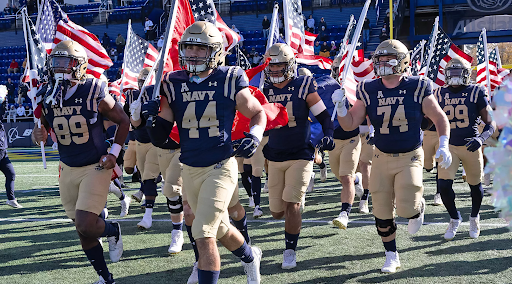
They're flying overhead. They're on uniforms, signs, athletic gear, banners, and souvenirs. On game day, they fill the stands. And when thousands of voices join together to sing the Academy's alma mater, those same two colors become something much bigger than a color palette.
Blue and gold are part of the language of the Yard.
But how did the USNA colors become such an enduring symbol of the Naval Academy—and how did they inspire one of its most beloved songs?
Related: 13 Things You Didn’t Know About USNA History
Before Blue and Gold, Every Class Had Its Colors
Here's something even longtime Navy fans may not know: the Naval Academy didn't always have official colors.
Beginning in the 19th century, individual classes selected their own colors, and the Academy's Color Parade and Color Girl traditions date to 1867 and 1871, respectively.
That changed in 1892, when blue and gold were officially designated as the colors of the Naval Academy, bringing an end to the practice of each class selecting its own.
It was a natural pairing. Blue had long-standing associations with the Navy and the sea, while gold was already prominent in naval insignia and uniforms. Together, the
Navy colors created a distinctive identity that could represent every class—and generations yet to come.
More than 130 years later, they're still doing exactly that.
A Song Worthy of the Colors
The colors had already been part of Academy life for decades when another tradition joined them.
In 1926, “Navy Blue and Gold” was first sung publicly at the Naval Academy. The Academy's historical record credits organist and choirmaster J. W. Crosley as its composer.
The song became USNA's alma mater and remains one of the most meaningful pieces of music associated with the Academy.
While “Anchors Aweigh” is the rousing fight song most people immediately associate with the Navy, “Navy Blue and Gold” occupies a different place in Academy tradition.
Its tone is more reflective. Its theme connects the Academy's colors to generations of sailors, service, loyalty, and sacrifice. Rather than simply celebrating a victory, the song asks those singing it to consider what the colors represent—and the responsibility that comes with wearing them.
That's a lot of meaning packed into blue and gold.
Related: Tour Highlight: Anchors Away Music Tour
When Do Midshipmen Sing “Navy Blue and Gold”?
If you've attended a Navy football game or other Navy match, you've likely experienced one of the song's most familiar traditions.
“Navy Blue and Gold” is traditionally sung at the conclusion of all Navy sporting events. Win or lose, the team gathers for the alma mater—a reminder that belonging to the Naval Academy is about something larger than the final score.
Think about the symmetry of that.
The song also plays a powerful role on Graduation Day. As the final group of diplomas is presented, the graduating class sings its alma mater before the traditional exchange of cheers and famous hat toss.
New midshipmen hear “Navy Blue and Gold” during their Induction Day ceremony as they begin their Academy journey. Four demanding years later, they sing it as graduates preparing to become Navy and Marine Corps officers.
The song effectively bookends the midshipman experience.
More Than Military Colors
Many branches, units, and institutions have distinctive military colors, but at USNA, blue and gold have become deeply intertwined with identity.
You'll see the Navy colors throughout the Yard and especially during athletic events, parades, ceremonies, and Commissioning Week. You'll find them on everything from Navy jerseys and N★ apparel to flags, gifts, and keepsakes.
For alumni, the colors can instantly bring Annapolis back to mind. For families, they represent pride in a midshipman's journey. For sports fans, they mean it's time to cheer.
And for midshipmen themselves, the USNA colors accompany four years unlike any other.
Come Experience the Blue and Gold
Of course, reading about Navy traditions isn't quite the same as standing in the middle of them.
Visit the Yard and take an official USNA tour to learn more about the Academy's history and traditions. Time your visit with a Navy sporting event, parade, musical performance, or other public event, and you may get to experience the blue and gold in action.
While you're here, stop for a meal, grab a coffee, or visit the USNA Gift Shop for some navy blue and gold of your own. You can also shop Navyonline.com from anywhere.
Purchases through NABSD help support the Brigade of Midshipmen, including extracurricular opportunities in music, theater, cultural arts, club sports, and other activities that build leadership, teamwork, and camaraderie.
More than a century after USNA officially chose its colors, navy blue and gold still connect yesterday's graduates, today's Brigade, and tomorrow's U.S. Navy and Marine Corps officers.
Wear them. Fly them. Cheer for them.
And if you find yourself on the Yard when the alma mater begins, join in—and discover what the blue and gold really mean.