-1.png)

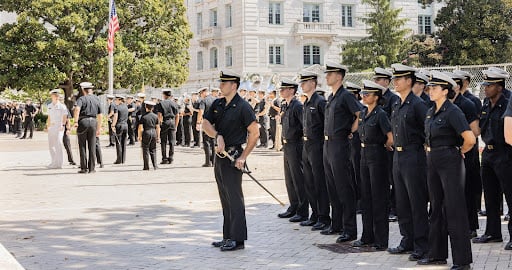
If you’ve spent any time strolling through the U.S. Naval Academy, you’ve likely noticed two things right away: midshipmen are always on the move - and always sharply dressed. Whether they’re hustling to class, heading to a formal event, or braving the Annapolis cold or humidity, their uniforms tell a story of tradition, precision, and pride. In fact, every midshipman regularly rotates between five main midshipman uniform categories, each serving a specific purpose and reflecting the professionalism expected of future U.S. Navy and U.S. Marine Corps officers.
Behind the scenes, there’s a whole support system ensuring every midshipman uniform looks flawless. Midshipmen are responsible for maintaining their own gear, but they’re backed by the Naval Academy Business Services Division (NABSD), whose USNA Laundry and Dry Cleaning Facility, Uniform Store,Cobbler Shop, and Tailor Shop help keep everything crisp, clean, and tailored to perfection. Every tuck, seam, and shine matters - and it shows.
Here’s your insider look at what each uniform means and when you’ll likely see midshipmen wearing it.
Related: Ready to Be Impressed? A Look Into Laundry at USNA
Precision Matters - Always
At the Naval Academy, uniforms aren’t simply clothing: They’re a practice in discipline. Midshipmen are expected to keep every uniform “squared away,” meaning spotless, well-pressed, and properly fitted. Standards are strict and detail-oriented, with specific guidelines for each season, event, and level of formality. This attention to detail begins the moment they report on Induction Day (I-Day) and continues throughout their careers as U.S. naval or marine officers.
Uniform regulations fall into three categories:
- Required Items: The must-wear basics that make up each uniform.
- Prescribable Items: Accessories or additions a unit commander may direct or authorize to wear with the basic uniform, unless otherwise directed.
- Optional Items: Personal-purchase items midshipmen may wear at their discretion unless otherwise directed. These may accompany the basic uniform, but are not Prescribable.
With these rules in mind, let’s break down the five primary uniforms you’ll see most often on the Yard.
1. Plebe Summer Uniforms
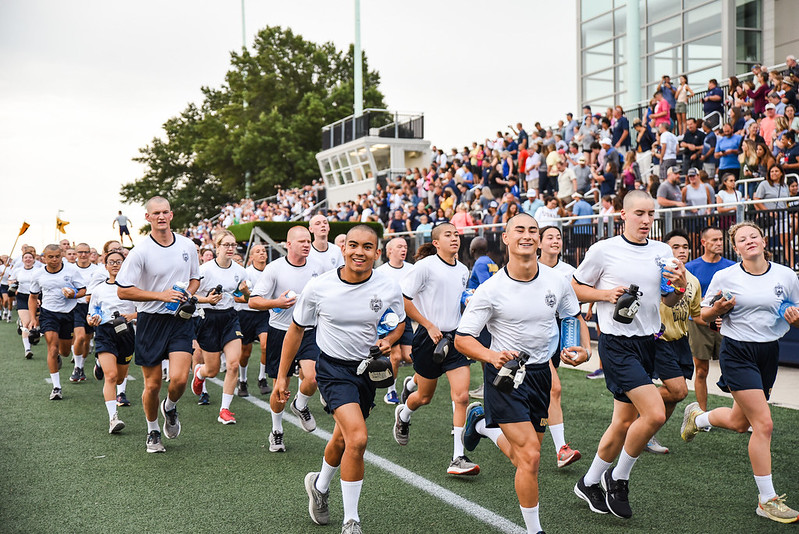
Plebe Summer is legendary (and famously hot and humid). New midshipmen need uniforms that are lightweight, durable, and ready for constant movement. During these intense early weeks, they wear:
- The Physical Education uniform: Navy gym shorts, USNA blue rim tee, sneakers, and socks, ideal for long days of training.
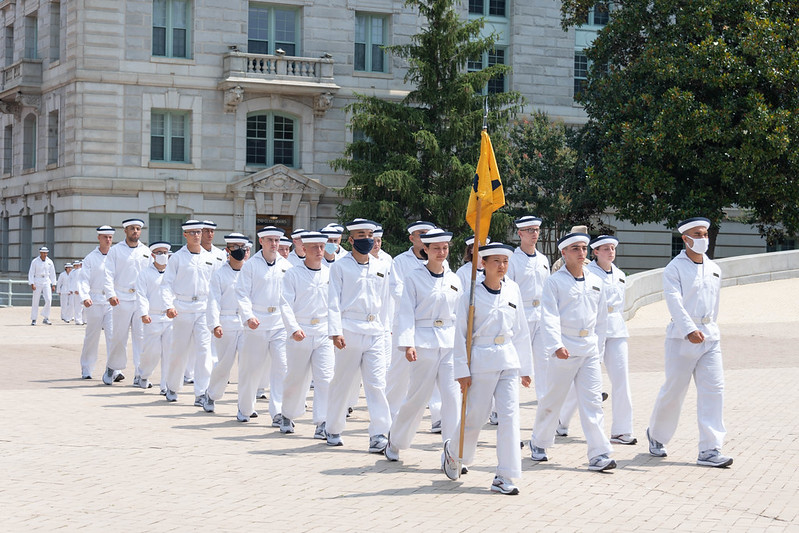
- White Works: A clean, simple uniform topped with the iconic blue-rimmed Dixie cup cover. An emblematic cover gets swapped out during the Herndon Climb, when the class works together to replace the greased-up “plebe hat” atop the monument (a beloved USNA tradition).
- Working uniforms: Described next.
2. Working Uniforms
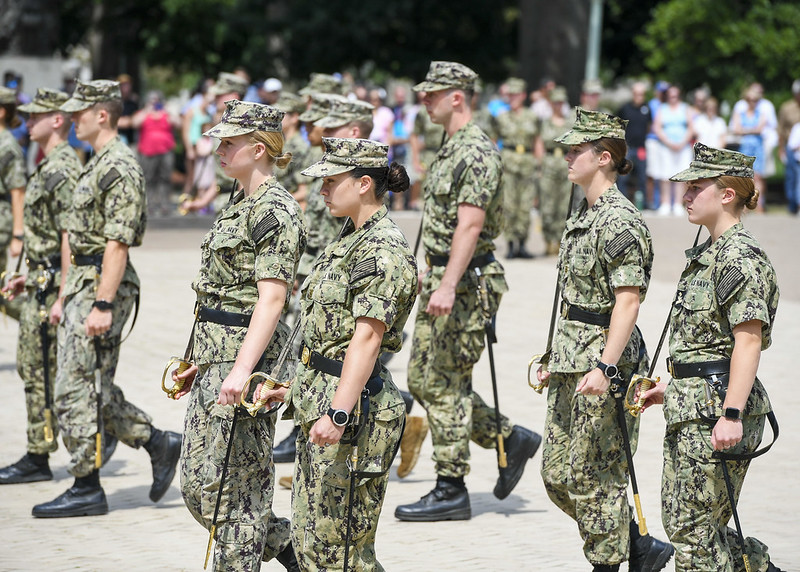
When uniforms become marked, muddy, or simply not suited for the task at hand, midshipmen switch to Navy Working Uniforms (NWUs). These come in two types - Type II and Type III - each used for specific training environments and evolutions. While NWU Type II is comprised of a specialized tan/brown digital desert camouflage that’s reserved for specialized Navy units like U.S. Navy SEALs and explosive ordnance disposal (EOD) officers, Type III is the standard woodland camouflage donned by midshipmen for events such as:
- Plebe Summer
- Anti-Terrorism Force Protection (ATFP) drills
- Other unit commander-directed activities
NWUs include features like combat or steel-toed boots, name and U.S. Navy tapes, collar insignia, and an eight-point cover. During cold weather, midshipmen may add gloves, a fleece jacket, and/or earmuffs.
During the academic year, midshipmen also wear a separate Working Uniform for class: dark trousers paired with a matching short-sleeve shirt or long-sleeved shirt that can be rolled up or down. It’s clean, simple, and functional.
3. Service Uniforms
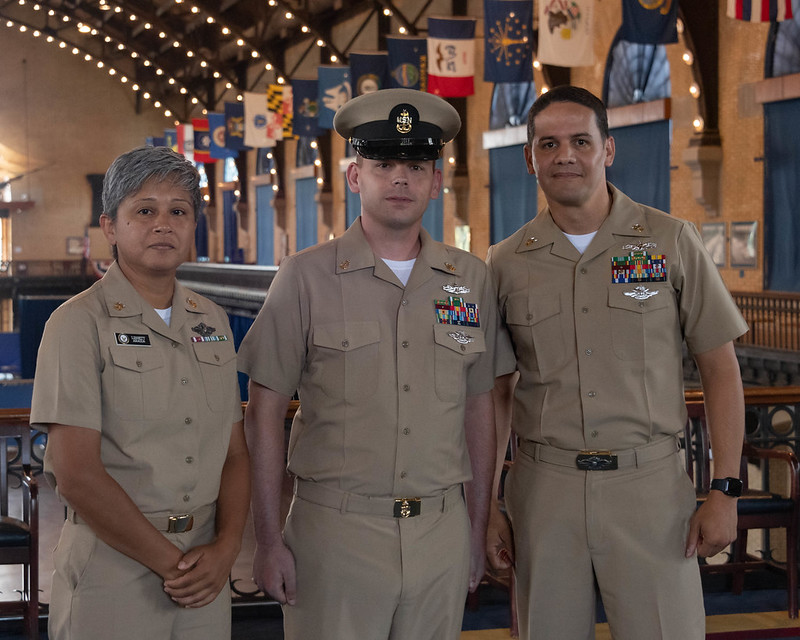
These are the “everyday uniforms” of the Brigade. Service uniforms are worn for:
- Going to class
- Standing watch
- Assigned duties
- Summer programs like Summer School, Summer Training, and Summer Cruises
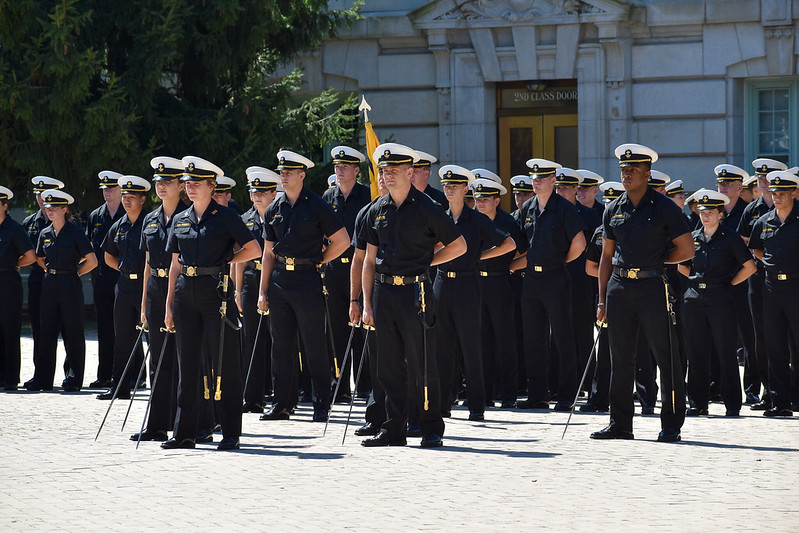
The most familiar version is Service Khaki, worn by both men and women. It includes a button-down khaki shirt, khaki trousers, a name tag, Garrison cap, collar insignia, and ribbons. The sword is a prescribable item for certain formations or ceremonies.
4. Service Dress
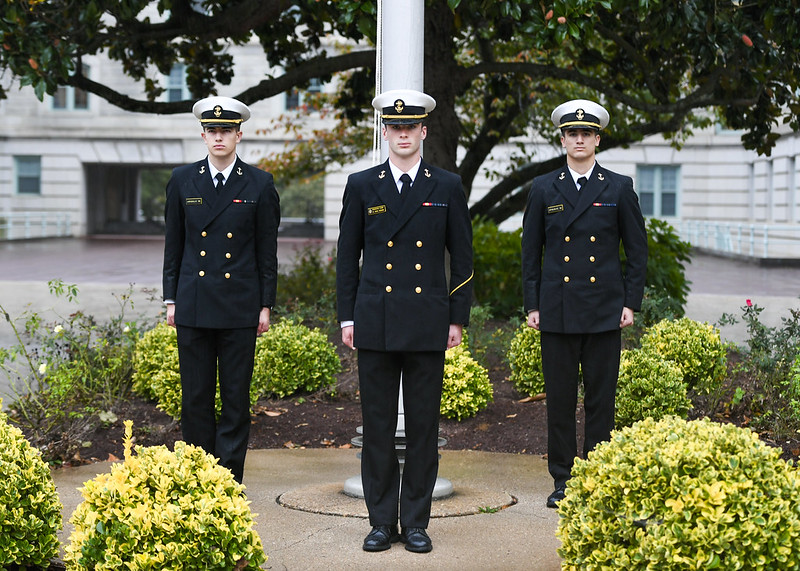
Think of Navy Service Dress uniforms as the military’s equivalent of a suit and tie. Midshipmen wear it to important but not fully formal events that require Dinner Dress, such as:
- Meetings with Academy leadership
- Academic or Aptitude Boards
- Official ceremonies
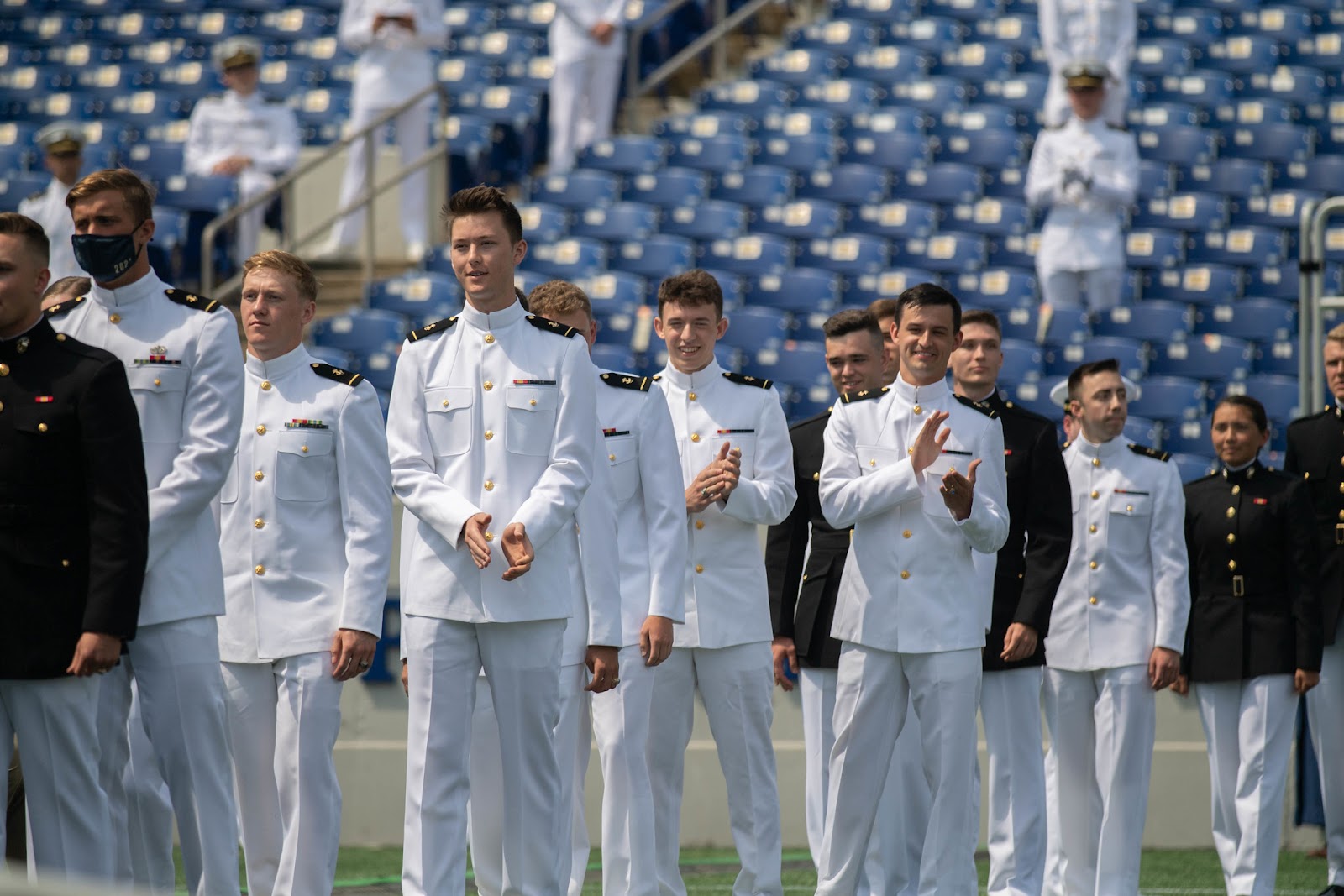
- Graduation (white Service Dress for Navy, Marine Corps blues for future Marines)
Depending upon geography and the corresponding climate, Service Dress may be seasonal. It can be worn year-round to official functions like a hearing with the Superintendent or Commandant, Academic Boards and Aptitude Boards, and other important occasions when Dinner Dress is not prescribed.
Navy dress white is used for graduation ceremonies for those commissioning into the Navy while Marines wear the USMC Navy dress blues. For Service Dress, both men and women wear a necktie (cross-over neck tab for women) for the blue version. They also have name tags, large breast insignia, and ribbons. The white version has white shoes. Gloves fall under Prescribable, and optional items may incorporate the all-important umbrella.
5. Dinner Dress
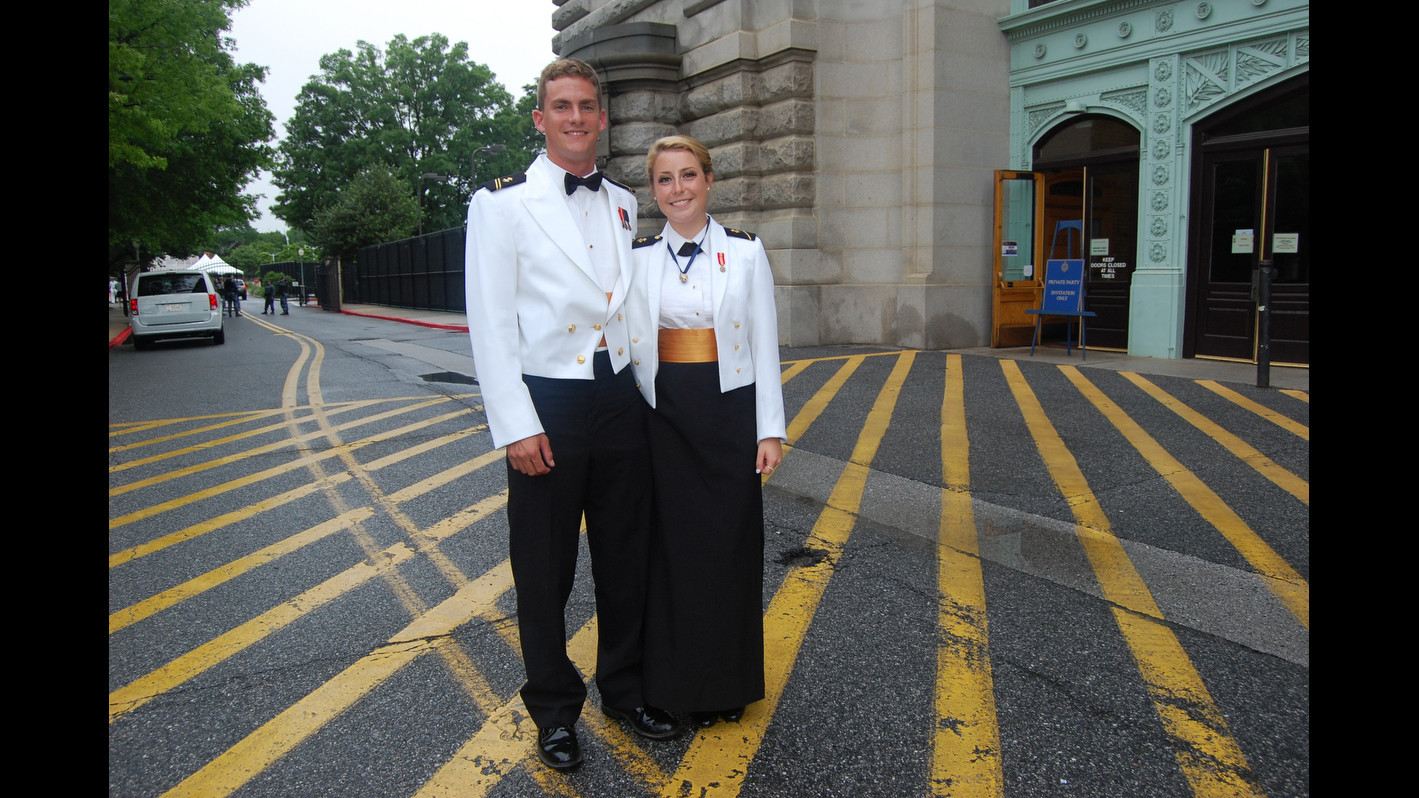
Reserved for the most formal Academy occasions, Dinner Dress or “Formal Dress” is equivalent to civilian black-tie attire. Midshipmen wear it for events like:
- USNA Ring Dance
- Dining-out evenings
- Select formal ceremonies
The Dinner Dress can be worn several ways. Men can wear it with a lower cut double-breasted blue jacket, use the same look in white, or wear a “dinner dress blue” with a service dress jacket (for midshipmen who have not yet received their dinner dress blue jacket). The dark uniform works with winter events and the white is for summer. All include a necktie for men and have miniature medals and miniature breast insignia. Leather or white gloves are prescribable items for this uniform, and an umbrella is optional.
Women wear a black neck tab for the first two options, along with a long skirt. For the Dress Blue, they wear a cross over neck tab and can also wear a skirt. Gloves are prescribed items. Optional items include earrings and a handbag (only for liberty). Like the men’s uniforms, an umbrella is recommended for rainy weather.
See the Uniforms in Action
The best way to understand these uniforms is to see them in motion. Come to the Yard, watch the Noon Meal Formation, stroll through the historic pathways, and observe how seamlessly uniforms are woven into midshipmen life.
Related: January at the Naval Academy: A Treasure Hunt
When you visit, dine, or shop on the Yard, you’re supporting the entire Brigade, because all proceeds go directly to the midshipmen. Your USNA tours, purchases from the USNA Gift Shop or Navyonline, and meals at The Alley Restaurant, Drydock Restaurant, and 1845 Coffee, help fund the programs that build camaraderie among the Brigade. Departments like NABSD’s uniform shop serve the Brigade by keeping these uniforms in excellent condition.
Come for a visit, soak up the history, and appreciate the precision and pride behind every uniform you see. These uniforms are full of meaning, just like your visit.